How crypto stopped being a revolution and became a barometer — and what the next five years actually look like
There is a number that tells you everything about what crypto has become.
In March 2026, the 30-day rolling correlation between Bitcoin and the S&P 500 hit 0.74. On certain intraday windows it touched 0.94. For context — a correlation of 1.0 means two assets move in perfect lockstep. At 0.94, Bitcoin wasn’t just moving with equities. It was equities, with more volatility and fewer circuit breakers.
The asset that was built to be uncorrelated to everything — the escape hatch, the parallel system, the thing you held precisely because it didn’t behave like everything else — now moves tick for tick with the Nasdaq on bad macro days.
That number is the obituary for one version of crypto. And the birth certificate for another.
HOW IT HAPPENED
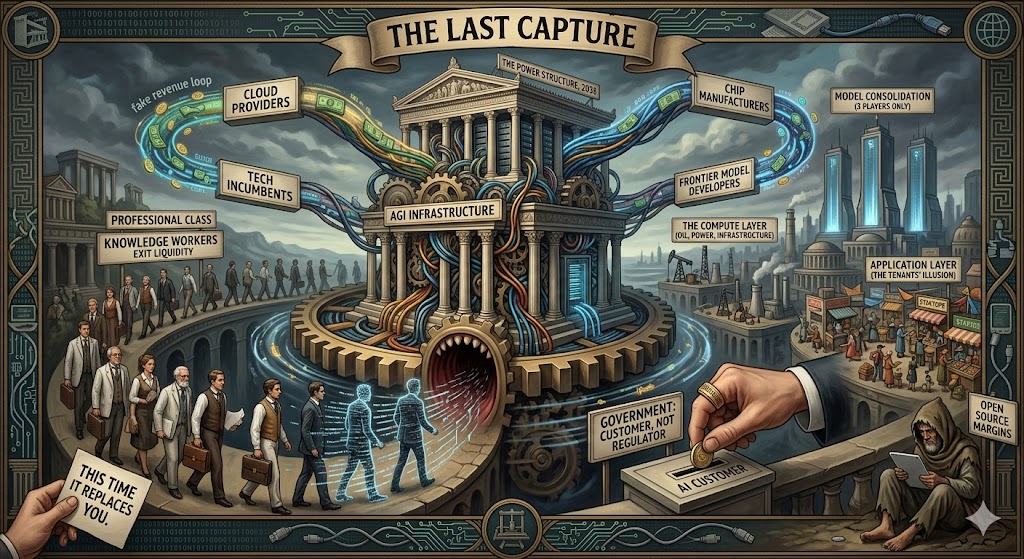
It didn’t happen because of a single event. It happened the way all institutional captures happen — gradually, then completely.
The ETF approvals in January 2024 were the inflection point nobody fully understood in real time. Spot Bitcoin ETFs pulled crypto into the same liquidity pool as equities. The same institutional desks. The same risk management frameworks. The same sell triggers. When a macro shock hits and a portfolio manager needs to reduce risk, they don’t discriminate between their S&P exposure and their Bitcoin ETF. They sell what they can sell. And Bitcoin, now deeply liquid and institutionally held, sells off alongside everything else.
Institutional investors increased crypto portfolio targets from 2% in 2024 to 5-10% by Q1 2026. That sounds like a victory. What it actually means is that crypto is now a line item in the same spreadsheet as everything else — evaluated alongside drawdown behaviour, liquidity under stress, and correlation dynamics. Managed. Hedged. Optimised.
The revolution became an alternative asset class. Which is another way of saying it became something to be managed rather than something to believe in.
WHAT CRYPTO ACTUALLY IS NOW
Not what anyone says it is. What it actually is, structurally, in mid-2026.
Bitcoin is digital gold with better liquidity and worse narrative discipline. It is a store of value that institutional portfolios now hold as a hedge against fiscal dominance — against the slow debasement of fiat currencies by governments that cannot stop spending. It is the most liquidity-sensitive asset in public markets, historically amplifying global M2 moves by 7.6x in both directions. When money supply expands, Bitcoin eventually goes up. When it contracts, Bitcoin goes down. Faster and further than almost anything else.
That’s not a revolutionary monetary system. That’s a leveraged macro trade with a fixed supply cap.
Ethereum is infrastructure in an identity crisis. It is the settlement layer for $158 billion in stablecoins. It processes more economic value daily than most countries. And its token has underperformed Bitcoin for two consecutive years because the value it creates flows to the Layer 2 networks built on top of it rather than back to ETH holders. Ethereum built the roads. Other people are collecting the tolls.
Whether that resolves in ETH’s favour over the next five years is the single most uncertain question in crypto. The technology is working. The value capture is broken. Those two things can coexist for a very long time.
Solana is the execution layer that won the cycle nobody officially declared over. Fast, cheap, increasingly institutional. Wall Street is quietly building payment rails and tokenised asset infrastructure on it. The memecoin reputation is fading. The real-world usage is growing. It is the highest-risk highest-reward position of the three major assets — and the most binary. One catastrophic network failure at the wrong moment, when serious institutional capital is depending on it, and the confidence damage could be permanent. If that doesn’t happen, the upside from here is the most compelling of any major chain.
Stablecoins are the actual winner of the entire cycle. Not a speculative asset. Infrastructure. 99.76% of all stablecoins are pegged to the US dollar. Every one must be backed by US Treasuries by law. The technology built to route around American financial dominance became the most effective vehicle for extending it globally. Washington understood this before the crypto community did. The GENIUS Act codified it. The revolution is now a Treasury demand mechanism and the US government is its biggest advocate.
THE VARIABLE NOBODY IS TALKING ABOUT CLEARLY
Everyone is watching the Fed. The dot plots. The rate cut timelines. Whether Jerome Powell’s replacement is dovish or hawkish.
That is the wrong variable.
The real leading indicator for Bitcoin — and by extension for the entire crypto market — is US Treasury bill issuance. Historically Bitcoin has shared 93% of its long-run variance with global liquidity. And the strongest leading relationship isn’t Fed policy or QE. It’s T-bill issuance, with a lag of roughly 10 weeks.
As T-bill issuance accelerates toward $600-800 billion annually from mid-2026, that liquidity impulse is expected to feed through to crypto prices in late 2026 and into 2027. The money is already being created. It just hasn’t arrived yet.
There is also a gap that is too large to ignore. Bitcoin’s M2-implied fair value based on global liquidity models currently sits around $136,000. The actual price is around $74,000. A 46% gap — one of the widest ever recorded in the dataset. That gap either closes upward as it historically always has, or the liquidity model breaks for the first time.
The liquidity setup is building toward something. The timing mechanism hasn’t fired yet.
What’s suppressing it is not monetary policy. It’s geopolitics.
THE IRAN VARIABLE
This is the part that makes crypto investors uncomfortable because it has nothing to do with blockchain technology or tokenomics or developer activity.
The Iran conflict is keeping energy prices elevated. Elevated energy prices keep inflation sticky. Sticky inflation above the Fed’s 2% target means the Fed cannot cut. BofA has pushed their first rate cut forecast to July 2027. Markets are pricing a 30% probability of a rate hike before a cut. J.P. Morgan expects no cuts in 2026 at all.
This is why the liquidity that exists on paper hasn’t translated into crypto price recovery. The risk premium from geopolitical instability is eating the monetary expansion. Capital that would normally flow into risk assets is sitting in gold, T-bills, and cash, waiting for a signal that it’s safe to move.
The signal it’s waiting for has nothing to do with a Bitcoin ETF approval or an Ethereum upgrade. It’s whether a conflict in the Middle East escalates or de-escalates.
That is what crypto as a macro asset actually means in practice. Your biggest variable is a decision made in Tehran or Washington that you have no influence over and no information advantage on. The same decision that determines oil prices and global inflation and Fed policy now determines your crypto portfolio.
The revolution became a barometer. And right now the barometer is reading storm.
THE NEXT FIVE YEARS — WHAT ACTUALLY HAPPENS
Not price targets. Structural trajectories. What the five-year landscape looks like based on the forces that are now locked in.
2026 — The uncomfortable hold
The first half continues as it has. Flat to down. BTC grinding between $65,000-$85,000. ETH underperforming. SOL volatile. Nothing resolves cleanly. The liquidity impulse from T-bill issuance begins feeding through in the second half but is partially offset by geopolitical risk premium. The four-year cycle narrative dies completely — analysts stop referencing it because the institutional ownership structure has made it obsolete. Volatility compresses further as more supply sits in long-duration institutional hands that don’t trade it actively.
Late 2026 into 2027 — The liquidity impulse fires
This is the window where the setup either plays out or it doesn’t. T-bill issuance expansion feeds through with its historical 10-week lag. If geopolitical tensions ease even partially — if Iran stabilises, if the Middle East risk premium compresses — the dual tailwind of expanding liquidity and falling risk premium hits simultaneously. BTC breaks above $100,000 and this time holds it structurally because the institutional infrastructure beneath it is far deeper than the last time it was at that level. ETH follows but underperforms BTC ratio-wise. SOL outperforms both in percentage terms.
If geopolitics escalates instead — oil spikes, inflation re-accelerates, Fed hikes — this window shifts to 2028. The structural setup doesn’t break. It delays.
2028-2029 — The sorting
This is where the divergence between the three major assets becomes permanent and visible.
Bitcoin’s trajectory is the clearest. It becomes a $200,000-$400,000 asset held by sovereign wealth funds, pension allocators, and corporate treasuries alongside gold. Boring. Legitimate. The volatility that made it exciting in 2017 is mostly gone. The culture that made it interesting in 2013 is entirely gone. What remains is the fixed supply cap and the institutional infrastructure — which turns out to be worth an enormous amount of money even if it isn’t worth any of the original idealism.
Ethereum either solves its value capture problem or it doesn’t. The Fusaka upgrade and subsequent roadmap improvements have already pushed ecosystem throughput above 100,000 transactions per second. The technology is not in question. The question is purely whether the economic model returns value to ETH holders as the settlement layer scales — or whether Layer 2s continue capturing it. If it resolves, ETH at $8,000-$15,000 is the destination. If it doesn’t, ETH underperforms everything and becomes the cautionary tale about building excellent infrastructure that the market doesn’t reward.
Solana becomes either the dominant execution layer for global tokenised finance — real-world assets, instant cross-border payments, programmable money at scale — or it has one catastrophic failure that permanently damages institutional confidence. There is limited middle ground. The binary nature of the outcome is the price of the risk/reward profile it offers.
2030 and beyond — The two cryptos
What emerges by the end of the decade is not one crypto ecosystem. It’s two.
The first is fully integrated into traditional finance. BlackRock runs it. Governments regulate it and quietly depend on it for stablecoin-based dollar dominance. Most people interact with it daily without knowing it’s crypto — stablecoins in their payments app, tokenised assets in their pension, Bitcoin in their portfolio alongside REITs and gold ETFs. The word crypto disappears from this layer. It just becomes finance.
The second exists in the margins. Smaller. Weirder. Genuinely permissionless. Used by people who actually need it — the unbanked, dissidents, jurisdictions with broken currencies, developers building things the regulated layer won’t permit. Governments call it criminal infrastructure periodically. It survives anyway because the technology is unstoppable at that layer and the people using it have no alternative.
The idealists who built crypto for the first vision end up being most relevant to the second one. Not the world-changing infrastructure they imagined. But something real and necessary for the people who have no other option.
WHAT THIS MEANS IF YOU’RE HOLDING
The strategic implications of crypto becoming a macro asset are straightforward and almost nobody states them plainly.
Your biggest risk is no longer technological. Protocol failure, exchange hacks, regulatory crackdowns — these are real but manageable risks. The risk that actually determines your 5-year outcome is global macro. Specifically: does the current geopolitical environment resolve or escalate? Does global liquidity expand as the structural models suggest it should? Does the Fed get room to cut before 2027?
Your edge has changed completely. In 2013, the edge was understanding the technology before anyone else did. In 2017 it was understanding network effects. In 2021 it was understanding DeFi primitives. In 2026 the edge is understanding global liquidity cycles, Treasury bill issuance patterns, geopolitical risk premiums, and central bank reaction functions. The people who will make the most money in the next five years aren’t the best crypto analysts. They’re the best macro analysts who also understand crypto.
Concentration in ETH is the live question. Anyone significantly overweight ETH relative to BTC is making a specific bet — that the settlement layer thesis resolves in the token’s favour, that Layer 2 value eventually flows back to mainnet, that the identity crisis ends cleanly. That bet might be right. But it should be a conscious choice with full awareness of the structural uncertainty, not a default position inherited from a previous cycle’s thesis.
The hold thesis is still intact — just not for the reasons it used to be.
Twelve years ago you held crypto because it was outside the system. Because it couldn’t be captured. Because it was building something genuinely different.
You hold it now because global fiscal expansion is structurally inevitable, because governments cannot stop debasing their currencies, because the fixed supply assets — Bitcoin specifically — become more valuable every time a central bank prints money it can’t unprint.
That’s a completely different reason. But it’s a real one. And in the end it might get you to the same destination — just via a road nobody expected to be travelling.
The revolution didn’t die.
It got a Bloomberg terminal.
And somewhere in the wreckage of everything it was supposed to be, the numbers still point up.
Not because of the technology.
Not because of the vision.
Because of the oldest force in economics — too much money, chasing too few things that can’t be created from nothing.
The idealists were wrong about almost everything except the one thing that mattered most.
Scarcity wins.
It just doesn’t win cleanly.