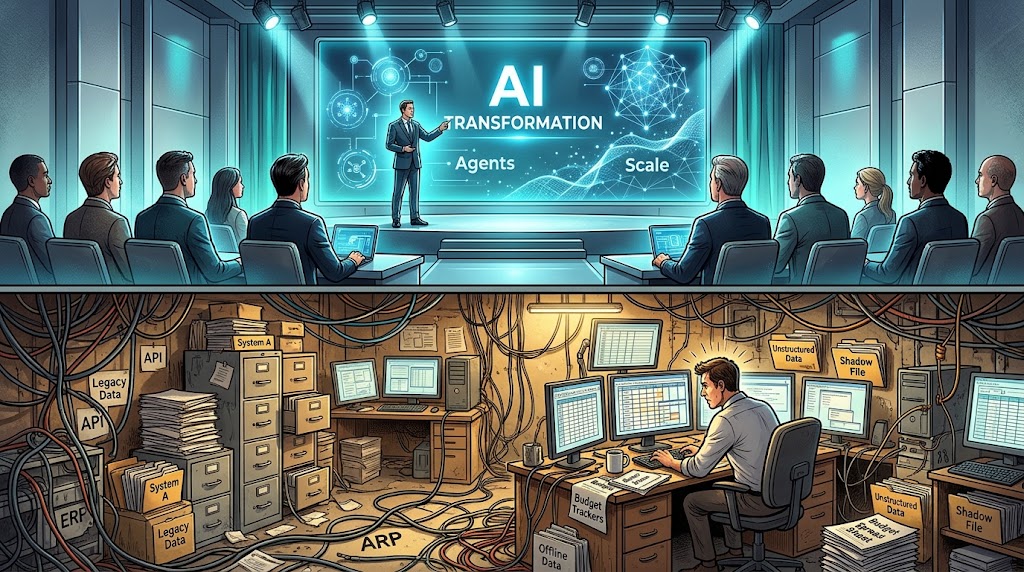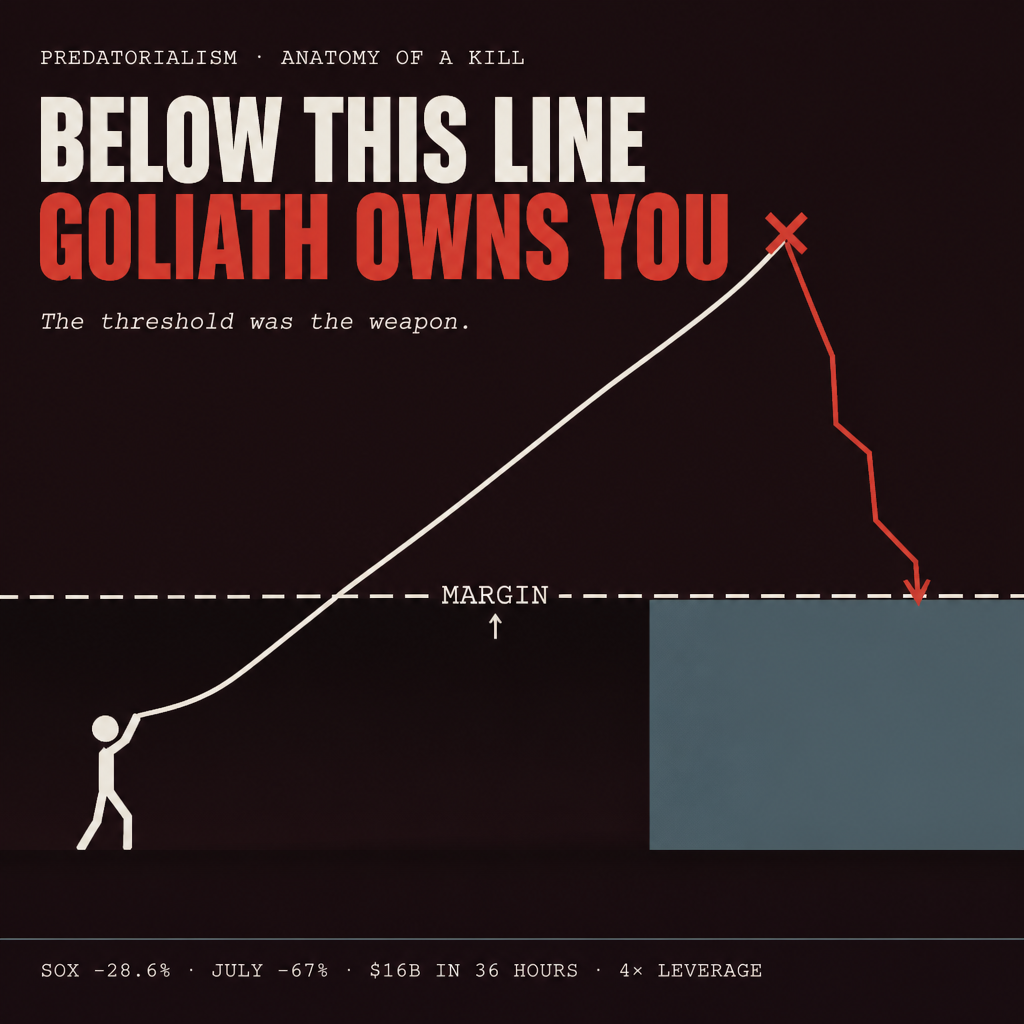
How value hollows out, rebuilds around proof, and spirals back to power
Nov 28, 2026 · @Juergen Hoebarth
Abstract
Every system that signals value — fame, money, brands, political authority — follows the same cycle. Each new communication technology extends reach, which makes the current source of value cheap to fake. Value then migrates to thinner and thinner signals until only collective attention remains: the hollow core.
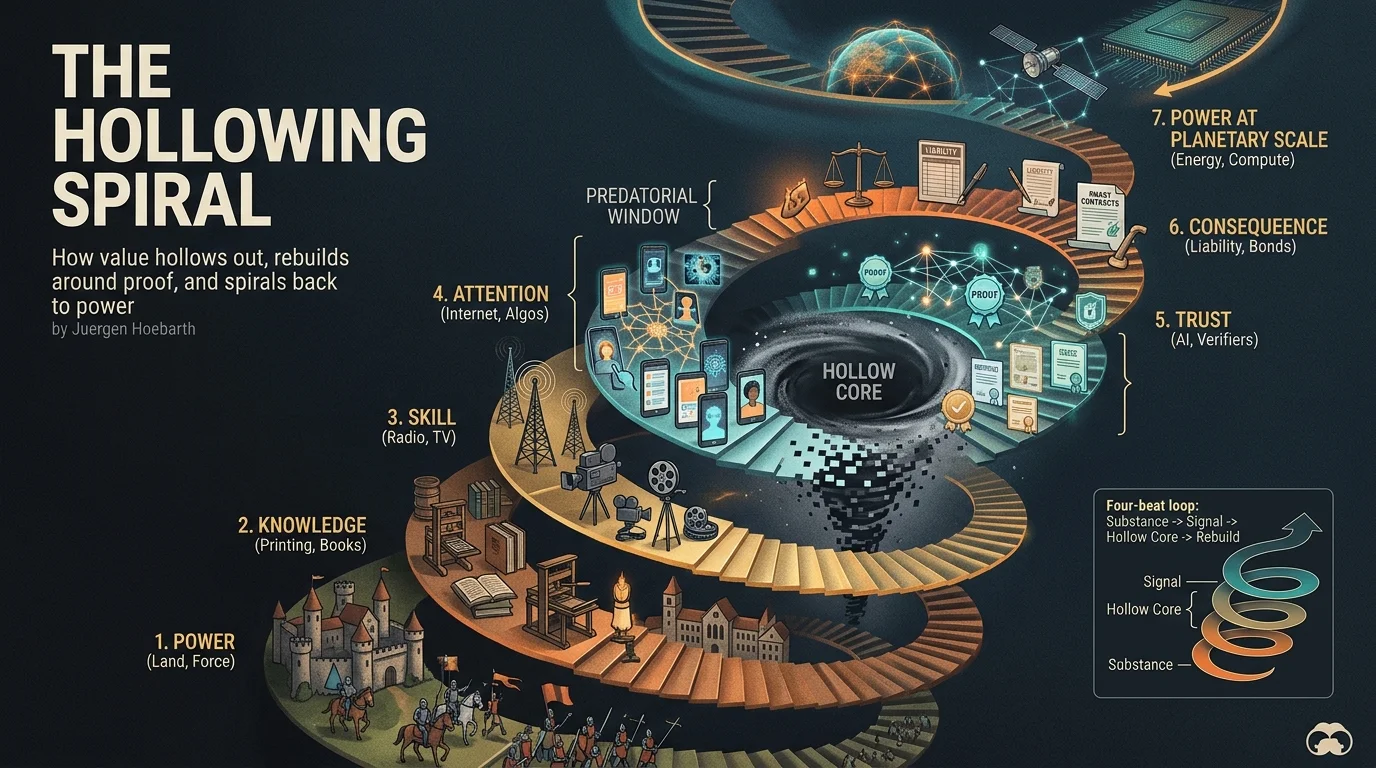
This paper names that pattern the Hollowing Spiral. Its engine is Hobarth’s Law: when a signal becomes cheaper to fake than to earn, value hollows out to belief, then rebuilds around proof. Each resource passes through four beats — substance, signal, hollow core, rebuild — and the loops chain into a spiral of rising reach: power, knowledge, skill, attention, trust, consequence, and finally power again at planetary scale. Two engines (reach rising, half-life falling) and six dimensions (access, gatekeeper, money, audience, valence, rules) move with it.
Six case studies — fame, crypto, brands, politics, stocks and company valuations — show the same arc. The paper identifies the current predatorial window, in which exploiters extract value from hollow signals before markets learn to filter them. It predicts a rebuild around verification and provenance in the 2030s, the later hollowing of trust itself, and a return of value to consequence and then to hard power: energy, compute and territory. It closes with an outlook on a second, faster loop in an AI-run economy.
1. The puzzle
In late 2026, one of the most-watched young men online was a 20-year-old known for nothing but being watched. Braden Peters, “Clavicular”, built a large audience on Kick and TikTok promoting “looksmaxxing” — testosterone, peptides, steroids and staged confrontations — before being indicted in Massachusetts on rape charges he denies (Boston Globe, NBC Boston). He has no athletic record, no music, no product. His asset is attention itself.
The same structure appears in finance. A memecoin has no product, no cash flow and no roadmap. Its holders know this. In early 2025 a sitting U.S. president and the president of Argentina each became attached to tokens of exactly this kind. Celebrity coins routinely rise and collapse within hours.
The puzzle is not that hollow assets exist. It is that they succeed at scale, in several unrelated domains at once, and that their audiences participate knowingly. This paper argues that this is not a coincidence or a moral failure. It is the predictable endpoint of a long cycle.
2. The framework
In every era, value accrues to whoever controls the scarcest resource. When a technology makes that resource abundant, value migrates to the next scarce thing. Each migration is one loop of a spiral.
The four-beat loop. Every resource passes through the same beats:
- Substance: the real thing — force, understanding, ability, attention, proof.
- Signal: a cheaper marker of it — crowns, diplomas, fame, follower counts, badges.
- Hollow core: the signal without the thing — ceremonial monarchs, empty credentials, celebrity without skill, bot followers, proof theater.
- Rebuild: value jumps to the next scarce resource.
The spiral. The loops chain together, each at a larger reach: power, knowledge, skill, attention, trust, consequence, and power again at planetary scale. Stages 5 to 7 are predictions.
| Stage | Carrier technology | Reach | Fame half-life | Access | Gatekeeper | Money | Audience | Valence | Rules |
|---|---|---|---|---|---|---|---|---|---|
| 1. Power | Roads, horses, armies | Regional | Generations | Birth | Crown, church | Tribute, land | Subjects | Fear equals respect | Ruler is the rule |
| 2. Knowledge | Printing, books | Continental | Lifetimes | Education | Publishers, universities | Patronage, royalties | Readers | Heresy can kill | Censorship, copyright |
| 3. Skill | Radio, film, TV | Global | Careers | Talent plus selection | Studios, networks, clubs | Contracts, salaries | Viewers | Scandal ends careers | Broadcast licensing |
| 4. Attention | Internet, algorithms | Global, instant | Hours | A phone | Platform algorithms | Ads, subscriptions, tokens | Participants, investors | Infamy pays too | Lagging badly |
| 5. Trust (predicted) | AI, verification networks | Unlimited, free | Track record | Verified identity | Protocols, verifiers | Reputation as collateral | Stakeholders | Bad fame costs again | Built into infrastructure |
| 6. Consequence (predicted) | Liability ledgers, AI agents | Unlimited | As long as the stake | Capital at risk | Insurers, courts, smart contracts | Bonds, guarantees, staking | Counterparties | Loss is the signal | Liability law |
| 7. Power at planetary scale (predicted) | Energy grids, compute, satellites | Planetary | Generations again | Ownership of energy, compute, land | States, sovereign funds | Rents on compute and energy | Dependents | Fear and respect again | Sovereignty |
Two engines drive the cycle.
- Reach rises. Each technology removes distance as a barrier. A resource that was locally scarce becomes globally abundant: the best local singer stops being special once the world’s best is on the radio.
- Half-life falls. The further fame travels, the faster it burns out. A king’s name lasted generations across a region; a viral clip reaches a billion people and lasts a day.
Six dimensions move with them. Access widens, gatekeepers shift from people to code, money converts more directly, and the audience moves from watching to owning. Valence decouples — in the attention stage infamy monetises as well as admiration — and rules arrive later each time.
The stages stack rather than replace one another: power never left. What changes is which resource sets the price of fame at the margin.
3. Hobarth’s Law
When a signal becomes cheaper to fake than to earn, value hollows out to belief, then rebuilds around proof.
The law describes a single loop of the spiral. It has three moving parts.
- Cost inversion. A signal works while producing it costs roughly what the underlying substance costs. A sword-maker’s stamp was trusted because forging one meant risking the guild. New reach technology lowers the cost of copying the signal faster than it lowers the cost of the substance. Once faking is cheaper than earning, imitators flood in.
- Hollowing. As fakes multiply, the market keeps paying for the signal while the substance behind it thins. Each new stage keeps the form and drops a layer of content, until the signal refers only to itself. What remains is collective belief: enough people paying attention at once.
- Rebuild. Hollow value has no floor. When enough participants are burned, a premium forms for whatever can prove there is something underneath. A new, costlier signal emerges, and the cycle restarts at a higher level of reach.
The law extends two older principles. Gresham’s law holds that bad money drives out good; Goodhart’s law that a measure which becomes a target stops measuring. Hobarth’s Law adds the driver (reach technology), the endpoint (pure belief) and the recovery (proof).
The belief premium. Hollowing is a matter of degree. Every price can be split into the value that would remain if the story ended tomorrow and a belief premium on top. A utility on 15 times earnings is mostly substance; a high-growth AI stock is substance plus a large premium; a memecoin is premium alone. In the attention era, the premium has grown across almost every asset class.
The hollowness ratio makes this measurable:
\text{Hollowness ratio} = \frac{\text{Price paid}}{\text{Value remaining without the narrative}}A ratio near 1 means you are paying for substance. A ratio that tends to infinity — where nothing remains without the story — marks the hollow core.
4. Six case studies
The same five-layer arc appears in six domains that share no institutions, only the same reach technologies.
| Layer | Fame | Crypto | Brands | Politics | Stocks | Company valuations |
|---|---|---|---|---|---|---|
| Substance | Power: force, rule | ICOs: a promised product | Maker’s mark: a guarantee of quality | Kings and warlords: command | Dividends: cash in hand | Assets: book value |
| First thinning | Knowledge: understanding | IEOs: exchange vetting | Industrial brands: consistency | Statesmen: argument, law | Earnings: today’s profit | Cash flow: future profit (DCF) |
| Second thinning | Skill: ability | DeFi: yield mechanics | Image brands: identity | TV performers: presence on camera | Growth: tomorrow’s profit | Revenue multiples: sales, ARR |
| Surface | Looks: appearance | NFTs: image and status | Hype brands: the logo as product | Celebrity candidates | Narrative: story stocks, SPACs | User metrics: eyeballs, DAUs |
| Hollow core | Attention: being watched | Memecoins: pure belief | Creator brands: an audience container | Influencer politicians: virality | Meme stocks: coordinated attention | Pedigree and story: pre-product valuations |
Fame. From kings to scholars to performers to influencers, each step needed less substance and more reach. Clavicular sits at the end of the chain: famous for being watched, monetised through the same attention whether it is admiring or appalled.
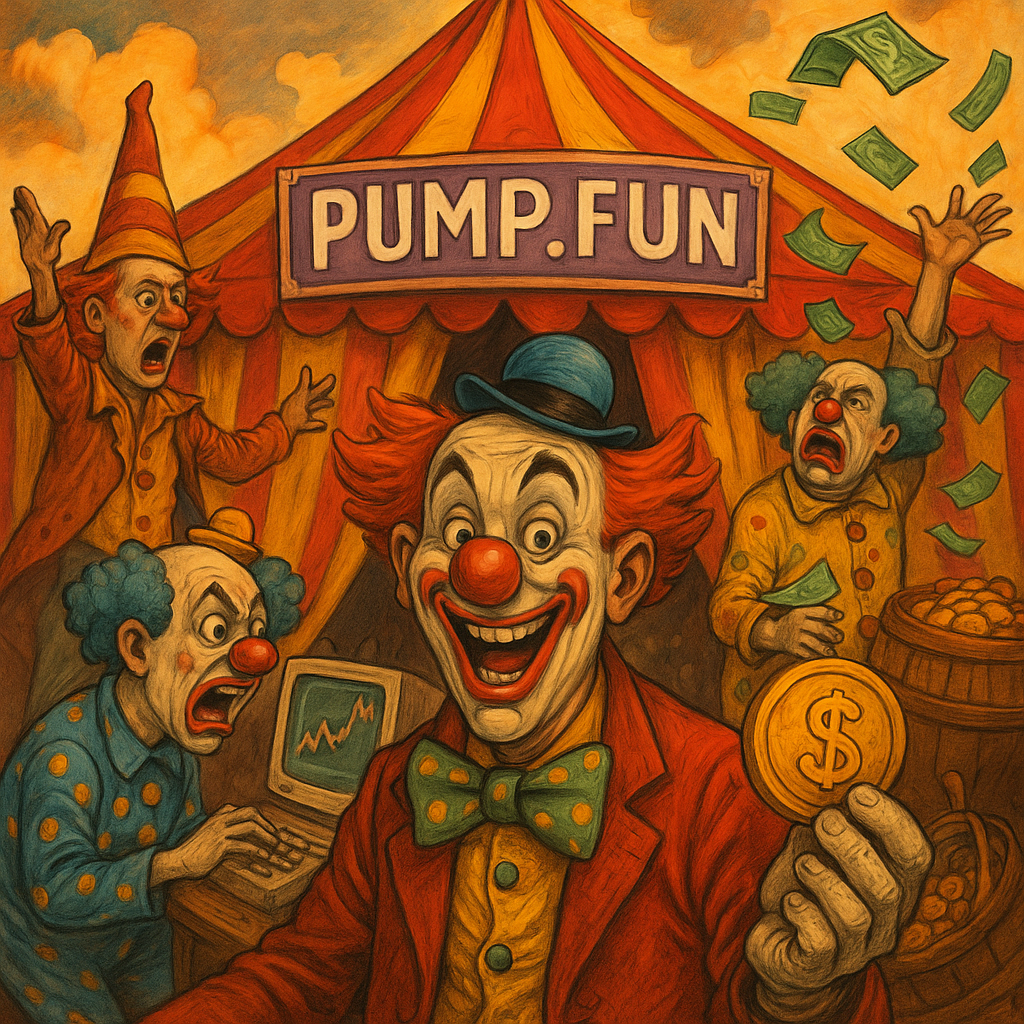
Crypto. The 2017 ICO sold a whitepaper and a promise. Each later wave sold less: vetted listings, then yield on yield, then JPEGs, then memecoins that openly promise nothing. Launch tools let anyone mint a token in seconds, and celebrity coins convert an audience straight into a tradeable asset.
Brands. A medieval maker’s mark meant someone would answer for the product. Industrial brands promised consistency, TV brands sold identity, and hype brands sold scarcity: Supreme’s 2016 logo brick sold out. Today’s creator brands are often generic goods wrapped around an influencer’s audience, and fade when the attention moves.
Politics. Authority moved from force to argument to televised performance. Research now finds the market for political attention is winner-takes-all: a handful of viral politicians capture most of the small-donor gains (VoxEU). In 2025 political leaders were linked directly to memecoins, fusing fame, money and power into one attention asset.
Stocks. Until 1958, U.S. stocks yielded more in dividends than bonds paid in interest: a share was a claim on cash in hand. Valuation then moved to current earnings, then to growth (the Nifty Fifty, the dot-com “eyeballs”), then to narrative (story stocks and the 2020–21 SPAC boom). Meme stocks such as GameStop in 2021 reached the hollow core: prices set by a community’s coordinated attention, detached from a shrinking business.
Stocks also show that hollowing is a spectrum, not a switch. Palantir is a growing, profitable business, yet at its November 5, 2026 close buyers paid about 51 times past-year revenue and about 108 times past-year earnings (Blofin). Its multiples fell sharply after a quarter that beat expectations (TradingView/Invezz) — the market weighing belief back toward substance.
Company valuations. Here the hollowing is visible in the metrics themselves. Valuation moved from assets (book value) to cash flow, to revenue multiples, to user metrics, and finally to pedigree and story: AI labs raising money at multibillion-dollar valuations before shipping a product. WeWork’s 2019 “community-adjusted EBITDA”, a profit measure that removed the costs, marks the surface layer; its fall from a $47B private valuation to bankruptcy marks the floor. Each step is Goodhart’s law: once a metric becomes the target, founders inflate it, and the market moves to a thinner one. After 2022, down rounds and a return to free cash flow, “default alive” and the Rule of 40 show the rebuild already at work.
The pattern also appears in art (Cattelan’s taped banana selling for $6.2M to a crypto founder), music (AI-generated bands drawing real audiences), sport (influencer boxing), food (viral desserts and ghost-kitchen brands), news (content farms), education (guru courses) and dating (follower counts as status).
5. The predatorial window
Every transition opens a period in which the old signal still persuades but can be faked cheaply. This paper calls it the predatorial window: new reach, old rules, cheap fakes. Those who see it first feed on those who still trust the signal.
Who profits. Insiders who launch the signal, and early holders who sell to late arrivals. In crypto this is explicit: late buyers are exit liquidity. In the attention economy it is the same trade — a streamer monetises an audience whose time and money flow one way.
What fuels it. “Financial nihilism” — a term credited to Demetri Kofinas of the Hidden Forces podcast (Brave New Coin) — describes young people who no longer believe conventional saving can buy them a home or a future, and so take lottery-shaped bets. A 2026 study finds memecoins behave less like investments and more like cultural-financial performances (Sajter & Kuzmić). Looksmaxxing sells the same thing to young men in the currency of status: a shortcut where the long road looks closed.
Why it closes. Three forces end each window: participants learn (enough people get burned), regulation catches up (MiCA in the EU, enforcement in the U.S., VARA in Dubai), and a new costly signal appears that fakes cannot match cheaply. The window is the gap between new reach and new rules.
6. The hollow core
When every layer is stripped away — force, knowledge, skill, looks, product, yield, image — what remains is collective belief: enough people agreeing to pay attention to the same thing at the same time.
This is the most uncomfortable finding of the framework. Memecoins and pure-attention celebrities are not a corruption of value; they are value with the substance removed, which reveals what it always partly rested on. Fiat money is backed by belief in the issuing state. A brand’s premium is belief in what it signals. A stock trades above book value on belief in the future. Earlier layers hid this; the hollow core exposes it.
The difference is the floor. Belief anchored to substance falls only as far as the substance. Belief with nothing underneath falls to zero the moment attention moves. That is why the hollow core is not a stable end state but the bottom of the cycle: once everyone has seen that it is empty, the demand for proof begins.
7. The rebuild around proof
Generative AI completes the hollowing: content, faces, voices and whole personalities can now be produced at near-zero cost. When attention itself becomes abundant, it stops being the scarce resource. Scarcity turns inward, toward things that cannot be generated: verified identity, provenance, accountability and a track record over time.
The rebuild is already visible in each domain.
- Fame: proof of personhood, verified accounts, reputation built on a record rather than reach.
- Money: tokenized real-world assets, regulated custody, proof of reserves — tokens that point to something.
- Brands: the EU’s digital product passports, traceable supply chains, “show the factory” transparency — the maker’s mark rebuilt with new technology.
- Politics: content provenance standards and deepfake disclosure rules, as voters demand proof that a message is real.
Two things distinguish the trust stage from those before it. First, reach is free and therefore no longer an advantage; a small audience that trusts you can outweigh a large one that merely watched. Second, for the first time in the cycle, negative fame starts to cost again, because a record is permanent and checkable.
The trust stage is a prediction, not an observed fact. Its main risk is capture: the platforms that monetised attention may try to own verification too.
8. Predictions, indicators and falsification
A theory earns its keep by risking being wrong. The Hollowing Spiral makes six testable predictions for the next five to ten years.
| Prediction | Indicator to track | What would falsify it |
|---|---|---|
| Verification commands a price premium | Price gap between verified and unverified accounts, goods, assets | No measurable premium as AI fakes spread |
| Hollow-asset share peaks, then declines | Memecoin share of crypto market cap; share of tokenized real-world assets | Memecoin share keeps rising after major regulation |
| Fame half-life stops shrinking for trusted figures | Audience retention for creators with verifiable records vs. viral-only creators | Viral-only creators retain audiences as long as credentialed ones |
| Infamy stops paying | Revenue and reach after scandals or indictments | Reach still grows after credible wrongdoing |
| Regulation lag shortens | Time from a new asset class to binding rules | Each new wave goes as long unregulated as the last |
| Trust later hollows into proof theater | Share of badges and attestations with no liability behind them; price of bonded vs. unbonded guarantees | Verified signals keep their premium indefinitely without anyone at stake |
If most of these indicators fail to move, the cycle is wrong in its final stage: hollowing would be the end state, not the bottom of a cycle.
9. Related work
The framework stands on a long line of thinkers, each of whom described one piece.
| Author | Work | Piece described |
|---|---|---|
| Chris Hayes | The Sirens’ Call (2025) | Attention as the scarce, extracted resource |
| Sajter & Kuzmić | Financial nihilism and the phenomenon of memecoins (2026) | Memecoins as cultural-financial performance |
| David Z. Morris | Nothing is True, Everything is Exchangeable | Crypto value referring only to itself |
| Cory Doctorow | “Enshittification” (2022 on) | Platforms decaying in stages as they extract |
| Tim Wu | The Attention Merchants (2016) | The history of selling attention |
| Michael Goldhaber | “The Attention Economy and the Net” (1997) | Attention as the internet’s currency |
| Neil Postman | Amusing Ourselves to Death (1985) | Media turning discourse into entertainment |
| Jean Baudrillard | Simulacra and Simulation (1981) | Signs replacing what they represent |
| Herbert Simon | Designing Organizations for an Information-Rich World (1971) | Information abundance creates attention scarcity |
| Guy Debord | Society of the Spectacle (1967) | Life mediated by images |
| Daniel Boorstin | The Image (1961) | The celebrity known for well-knownness |
| Goodhart; Gresham | Goodhart’s law; Gresham’s law | Targeted measures fail; bad money drives out good |
Baudrillard comes closest: his stages of the image, ending in a copy with no original, describe the hollow core. What this paper adds is one historical sequence across all four domains, reach and half-life as the engine, the six dimensions, and a prediction of recovery. Most of this literature ends in critique; the Hollowing Spiral ends in a rebuild, then another loop.
10. Implications
For investors. Distinguish assets anchored to substance from assets anchored only to attention. The second kind can rise faster but has no floor. In a predatorial window, ask who the exit liquidity is — if you cannot tell, it is probably you.
For builders. Every hollow market is an opening to sell proof. The most durable businesses of the trust stage will be infrastructure: identity, custody, provenance, verification and reputation that can be carried across platforms. Tokenization is valuable when the token points to something real and auditable. Late in the trust loop, as proof is commoditised, value shifts toward consequence (bonded guarantees) and then hard power: energy, compute and the jurisdictions that host them.
For regulators. The harm concentrates in the window between new reach and new rules. Shortening that lag matters more than perfecting the rules. Disclosure of paid political and commercial influence, and verifiable provenance for media, target the window directly.
For parents. Children now meet the attention economy before they meet its alternatives. The defence is not a ban but a better model of worth: skills that take time, relationships with a record, and the habit of asking what lies underneath any signal.
11. Beyond trust: the spiral closes
Applied to itself, Hobarth’s Law predicts that trust will hollow too. Once verification is automated, badges and attestations are mass-produced until they mean little — proof theater. The precedent exists: before 2008, AAA ratings were real verification attached to mortgage bonds that proved hollow.
Stage 6, consequence. When proof is free, the scarce signal becomes who loses if it is wrong. A signature backed by personal liability, a founder’s own money at risk, a professional license on the line: accepting real loss is costly to fake. Its companion is presence — a physical person who is actually there, rare once any face or voice can be generated.
Stage 7, power at planetary scale. When AI performs most knowledge and skill work, and AI agents become the audience that chooses what gets bought, what stays scarce is what AI itself needs: energy, compute, land, physical infrastructure and the sovereignty to control them. That is power again.
The spiral returns to its starting point at a larger reach. Each loop ends where the first began, which is why the history of value reads less like decline and more like a recurring pattern with rising stakes.
[embed: node/3aea0965-9bd9]
Stages 1 to 4 are observed; 5 to 7 are predictions. Attention, the current stage, is where the predatorial window is open now.
12. Outlook: the second loop
The second loop most likely repeats the same seven stages in an economy run largely by AI, where machines are both the workers and the audience. The table is a forecast; later rows are less certain.
| Stage | Loop 1 (human economy) | Loop 2 (AI economy) | Likely hollow core |
|---|---|---|---|
| Power | Land, armies | Energy, compute, chips | Data centres built on hype and left underused |
| Knowledge | Scholars, books | Model weights, proprietary data | Model collapse: AI trained on AI-generated output |
| Skill | Athletes, artists | Agent capabilities, robotics | Benchmark gaming: agents that score well and fail in use |
| Attention | Human eyeballs | Being chosen by AI agents | Agent spam; content optimised only for machines |
| Trust | Verified humans | Cryptographic agent identity | Certified agents with no one accountable behind them |
| Consequence | Personal liability | Bonded agents, insured AI decisions | Insurance pools that cannot pay |
| Power | Planetary infrastructure | Off-planet energy and resources | Too far out to call |
The spiral tightens. At machine speed, loop 2’s stages may last years rather than decades, so the whole loop could complete within a single lifetime. Section 13 measures this acceleration.
The audience becomes machines. Loop 2’s attention stage has already begun: businesses now optimise to be recommended by AI assistants rather than ranked by search engines. The new fame is being the answer an agent picks.
Humans move from producers to principals. When agents do the work and judge it, the human role narrows to owning (capital, compute, energy), deciding (setting goals and bearing consequences) and being present. Liability matters more than ever, because someone must still answer for what machines do.
The two loops overlap now. Loop 1 is entering its trust stage while loop 2 is in its power stage, the race to build compute. The strongest position is the intersection: trust infrastructure for AI agents — identity, custody, verification and liability for machines transacting with machines. It is loop 1’s rebuild and loop 2’s foundation at once.
13. Acceleration: why the spiral tightens
Each stage has lasted roughly a third to a tenth as long as the one before, because each carrier technology spread faster than the last.
[embed: node/4eba50bf-5e1b]
The compression law. A stage lasts about as long as it takes its reach technology to saturate. Printing needed centuries to spread, radio and television decades, the internet about fifteen years, and AI assistants reached hundreds of millions of users within a few years. Across the observed stages, each has been roughly 3.5 to 9 times shorter than its predecessor.
Where it converges. If the ratio holds near 3.5, the remaining stages form a shrinking series: about 25, then 7, then 2 years. The rest of the first loop would then complete by around 2040, overlapping the start of the second loop. This is a projection from four data points, not a law of nature.
What brakes it: atoms. Bits compress; atoms do not. Power plants, chip fabs, grids and land take years to permit and build, whatever the speed of software. Stages built on information (knowledge, attention, trust) accelerate; stages built on physical power resist acceleration. Hard power becomes more valuable precisely because it cannot be sped up.
What acceleration changes.
- Predatorial windows get shorter and more intense. More extraction happens in less time, and the exit comes sooner.
- Regulation lag becomes structural. Law moves at human speed; a stage may now end before its rules arrive.
- Careers and companies must cross stages. A 40-year career now spans three or four stages, not one.
- Timing outweighs direction. The window to build in a rebuild may be two to five years, not decades.
14. Trust infrastructure for synthetic agents
The strongest position in the spiral is proof and liability infrastructure for synthetic agents, digital and physical. It serves loop 1’s trust stage and loop 2’s attention stage at once, and it leads into the consequence stage after them.
Agents need the same four layers people needed, at machine speed:
| Layer | Question it answers | Digital agents | Physical agents |
|---|---|---|---|
| Identity | Who is this agent, and who stands behind it? | Verifiable link to a legal owner; “know your agent” before it can pay, sign or call | The same, bound to tamper-proof hardware |
| Authority | What may it do? | Spending limits, scopes, revocable mandates | Operating zones, safety certification, permitted tasks |
| Custody | What does it hold? | Wallets and escrow it cannot drain alone | Assets, keys and goods in its care |
| Consequence | Who pays when it is wrong? | Bonded or insured agents; track record lowers the cost of the next transaction | Insurance tied to the hardware; liability is larger and regulated sooner |
Digital agents first. Trading bots, buying agents and voice agents already transact, so impersonation, spam and runaway spending are today’s problems. Verification before an agent can act is the first market.
Physical agents next. Robots, drones and autonomous vehicles add physical proof: tamper-proof logs of where they were and what they did. Because harm is physical, regulation arrives faster and liability rails become mandatory.
Why it compounds. Liability rails for machines are hard to replicate: they need licenses, capital and a track record. That turns a trust-stage business into a consequence-stage asset, and eventually into a form of hard power.
Conclusion
Fame began with power, passed through knowledge and skill, and now rests on attention alone. Money, brands, politics, stocks and company valuations travelled the same road at the same speed, because they ride the same reach technologies. Each loop made value easier to fake and ended closer to pure belief.
The hollow core is not the end. Value rebuilds around proof, then around consequence, and finally returns to power at a scale no king could imagine. Then a second, faster loop begins, with machines as workers and audience. The practical rule holds on every loop: build in the rebuild, sell at the signal, exit before the hollow core.
Sources
- Who is Clavicular? — Boston Globe
- Clavicular indicted on Cape Cod rape charges — NBC Boston
- The returns to viral media — VoxEU/CEPR
- The politics of attention — ECPS
- Financial nihilism and the phenomenon of memecoins — Sajter & Kuzmić (2026)
- Memecoin season and the rise of financial nihilism — Brave New Coin
- Nothing is True, Everything is Exchangeable — David Z. Morris
- The Sirens’ Call — Chris Hayes, Penguin Random House
- Why is Palantir stock so expensive? — Blofin
- Palantir stock: is it okay to ignore its P/E multiple? — Invezz via TradingView
Historical examples not linked above (TRUMP and LIBRA tokens, Supreme’s brick, Cattelan’s banana, AI-generated bands, GameStop, WeWork, pre-product AI lab valuations, the 1958 dividend crossover) are cited from general knowledge and should be checked before publication.