The Tax on Effort. Going the extra mile feels like winning. Here’s who actually gets paid for it.
A client asks for a one-page summary. You send six pages, a model and a deck. They reply within the hour: “This is amazing, thank you.”
It feels like winning.
Six months later they ask again, and one page isn’t enough anymore. Nobody said so. Nobody had to.
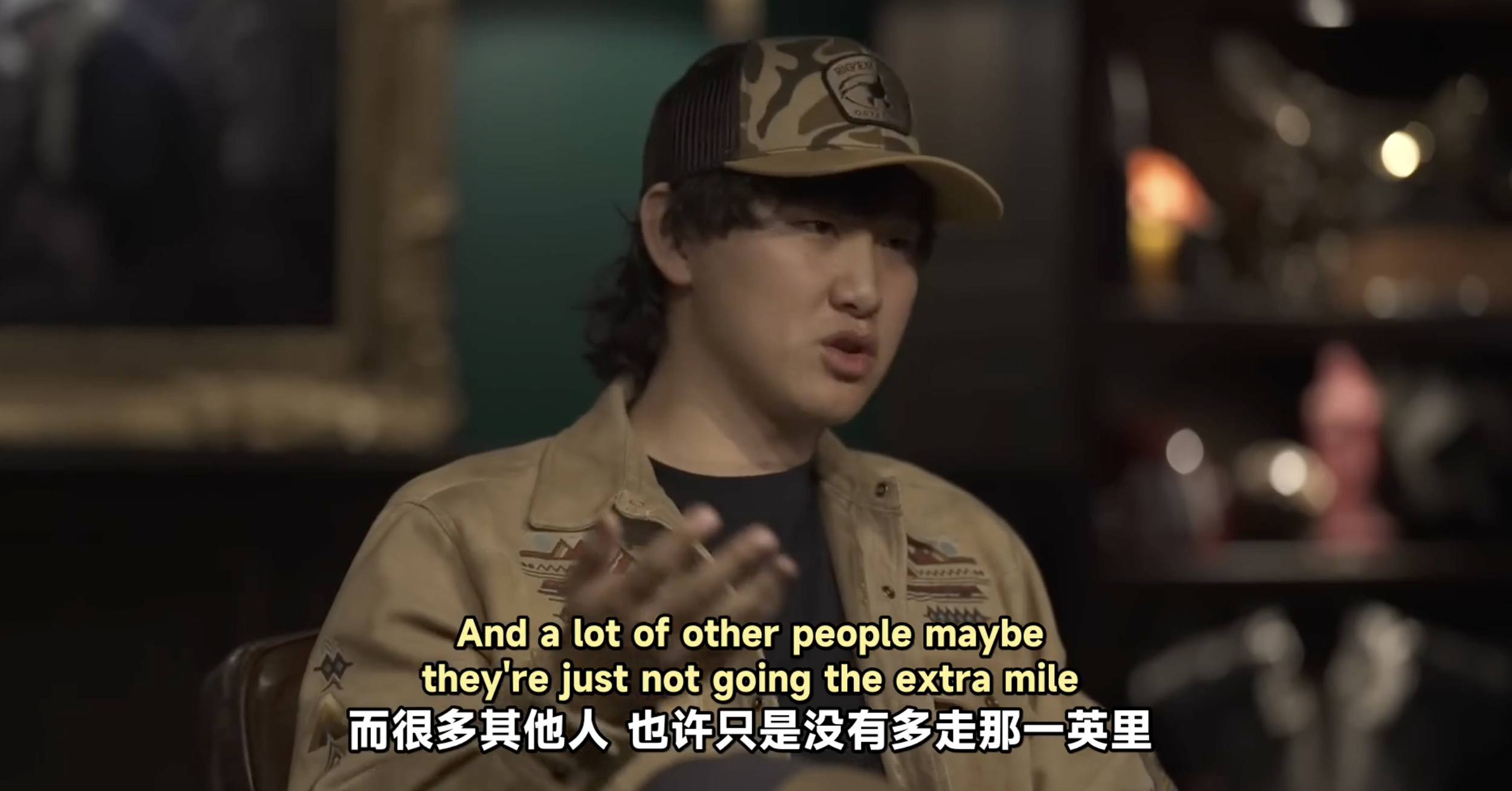
This week a clip of Alexandr Wang went viral in several versions, telling half a million people that this exact moment is the secret to beating 99% of the world: go ten miles when the contract says one, deliver 200% when everyone else delivers 100%.
It sounds right. Most of us have heard some version of it since our first job. But run it through simple arithmetic.
Two invoices
Behind the first: 100 worth of work. Behind the second: 200.
The client pays the same for both. So where did the other 100 go?
Picture two invoices. Both say 100.
It went to the client. It shows up nowhere on your books and everywhere on theirs. That isn’t a moat. It’s a transfer.
Then it becomes the baseline
Nobody sends back free work. Nobody writes “please do less next time.”
So your 200% gets accepted, and the moment it’s accepted, it becomes the new 100%. Next time you have to beat it. You haven’t built a moat. You’ve built a treadmill, and you set the speed yourself.
And it spreads. When enough people give the extra away, the colleague who delivers exactly what was agreed starts to look slow. The supplier who quotes honestly starts to look expensive. Your generosity becomes everyone else’s tax.
It used to work. Here’s what changed.
To be fair, the grind is old. The apprentice swept the workshop for years. The junior lawyer worked eighty-hour weeks to make partner.
But those deals had an ending. The extra effort bought you something you would one day own: the trade, the partnership, a seat at the table.
Two things broke that deal. First, most work no longer comes with a seat at the end. So the extra effort isn’t a down payment anymore. It’s just a payment.
Second, output got cheap. AI can now produce ten miles of documents, code and decks in an afternoon. Delivering 200% of output in 2026 means delivering more of the cheapest thing there is.
What’s still scarce is judgment, and the willingness to own a decision. You can’t over-deliver those by the kilo.
So who gets the extra 100%?
Follow it and it lands in familiar places. The client, who gets free work and a cheaper benchmark for everyone after you. The employer, whose margin absorbs the unpaid hours. The platform, which turns “you’re not working hard enough” into views.
And sometimes the person giving the advice. Scale AI, the company Wang built, ran on a large workforce of contract annotators and raters. In August 2026 it agreed to a $12.5 million settlement of a California class action alleging those workers were misclassified, while denying liability. One of the allegations: pay was docked when tasks took longer than Scale’s own time estimates.
In other words, over-delivery there wasn’t rewarded. It was collected.
What to do instead
None of this means doing the minimum. That’s just as lazy as the clip. Over-delivery isn’t wrong. It’s a currency, and a currency can be invested or it can leak.
I co-founded a company, and I give work away too. These are the three rules I try to hold myself to:
- Over-deliver on purpose. Do it where it buys something you keep: a reference client, a renewal, a first project that opens the door, work with your name on it.
- Make the gift visible. Put the extra on the invoice with its real value and a zero next to it: additional analysis, 4,000, waived. Same goodwill, but now they know what it cost.
- Price the outcome, not the effort. Everywhere else, deliver what was agreed, do it well, and charge for the result.
The one-line version
Going the extra mile used to buy you a seat at the table. Now it mostly buys someone else a cheaper meal.